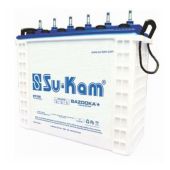
SU-KAM SOLAR BAZOOKA+ 150AH Battery – Complete Guide for Solar Power Backup
Solar energy is becoming an increasingly popular choice for homes, businesses, offices, and commercial establishments looking for reliable power solutions. A suitable battery is an important part of a solar power system because it stores electrical energy for use when solar generation is unavailable.
The SU-KAM SOLAR BAZOOKA+ 150AH BATTERY is a solar battery option for applications requiring energy storage and backup power. With a 150Ah capacity, it can be considered for a variety of solar inverter and backup power requirements.
What is the SU-KAM SOLAR BAZOOKA+ 150AH Battery?
The SU-KAM SOLAR BAZOOKA+ 150AH is designed for solar energy storage and backup applications. A solar battery stores electrical energy and makes the stored energy available when required.
In a typical solar power system, solar panels generate electricity during daylight hours. Depending on the system configuration, the available energy can be used by connected loads and excess energy can be stored in the battery. The stored energy can then be used when solar generation is insufficient.
Why Choose a 150Ah Solar Battery?
Battery capacity is an important consideration when planning a solar backup system. A 150Ah battery provides a useful amount of stored energy and can be considered for applications requiring more capacity than smaller battery options.
The actual backup time depends on the connected load, inverter efficiency, battery condition, discharge level, charging conditions, and other system factors. Therefore, the battery should be selected according to the overall power requirement rather than capacity alone.
Key Features of SU-KAM SOLAR BAZOOKA+ 150AH
- 150Ah battery capacity
- Suitable for solar power and backup applications
- Designed for energy storage requirements
- Can be used with compatible solar inverter systems
- Suitable for residential and commercial applications
- Can form part of a properly designed solar backup system
Applications of SU-KAM SOLAR BAZOOKA+ 150AH Battery
The SU-KAM SOLAR BAZOOKA+ 150AH battery can be considered for different applications where stored electrical energy and backup power are required.
1. Residential Solar Systems
For homes using solar power, battery storage can help store energy generated during periods of solar production. The stored energy can subsequently be used for selected household loads when solar generation is unavailable.
2. Commercial and Office Backup
Offices, shops, small businesses, and other commercial establishments can use appropriately designed battery backup systems to support essential electrical equipment during power interruptions.
3. Solar Inverter Systems
The battery can be used as part of a compatible solar inverter and battery configuration. Before installation, the inverter voltage, battery requirements, charging specifications, and system configuration should be verified.
4. Backup Power Applications
Battery storage can provide backup power when the main electricity supply is interrupted. The available backup duration depends on the battery configuration, inverter, and connected electrical load.
How Does a Solar Battery Work?
A typical solar power system includes solar panels, an inverter or solar charge controller, batteries, and electrical loads.
During daylight hours, solar panels generate electricity. Depending on the system design, this electricity can be used directly by connected equipment while available surplus energy can be stored in the battery.
When solar generation is low or unavailable, the stored energy can be supplied to connected loads through the inverter.
This allows battery storage to support the overall operation of a solar backup system.
Understanding 150Ah Battery Capacity
Battery capacity is commonly expressed in ampere-hours (Ah). For example, a nominal calculation for a 12V 150Ah battery can be represented as:
Energy = Voltage × Ampere-hour
12V × 150Ah = 1,800Wh
This is approximately 1.8kWh of nominal energy under the stated conditions.
Actual usable energy can be lower than the theoretical value because of factors such as inverter losses, discharge characteristics, operating conditions, battery age, temperature, and the allowable depth of discharge.
How Much Backup Can a 150Ah Battery Provide?
The backup time of a 150Ah battery depends primarily on the connected load and the complete system configuration.
For example, a system with a lower electrical load will generally require less energy per hour than a system operating several high-power appliances. The inverter's efficiency and the battery's operating conditions also affect the actual backup time.
Therefore, it is recommended to calculate the required backup based on the actual load rather than assuming a fixed backup duration from the 150Ah rating alone.
How to Select the Right Solar Battery
Before purchasing a solar battery, several factors should be considered:
- Required backup duration
- Total connected electrical load
- Inverter capacity
- System voltage
- Number of batteries required
- Daily electricity consumption
- Solar panel capacity
- Charging requirements
- Installation environment
- Expected operating conditions
A proper assessment of the complete solar system can help determine the appropriate battery capacity and configuration.
Installation and Maintenance
Correct installation is important for safe and reliable battery operation. The battery should be installed according to the manufacturer's instructions and connected to compatible charging and inverter equipment.
The installation location should be appropriate for the battery and protected from unsuitable environmental conditions. Electrical cables and connections should be correctly selected and securely installed.
Regular inspection and maintenance, where applicable, can help identify connection issues or other problems and support reliable system operation.
SU-KAM SOLAR BAZOOKA+ 150AH Battery for Solar Applications
If you are looking for a 150Ah battery for solar power or backup applications, the SU-KAM SOLAR BAZOOKA+ 150AH BATTERY can be considered as part of a properly designed energy-storage system.
The correct battery configuration depends on factors such as the connected load, inverter specifications, required backup duration, solar generation capacity, and overall system design.
Choosing the battery based on the complete application rather than Ah capacity alone can help ensure that the solar power system is appropriately configured.
Benefits of Using Battery Storage with Solar Power
- Stores electrical energy for later use
- Can support backup power requirements
- Helps make stored solar energy available when sunlight is unavailable
- Can be integrated with compatible solar inverter systems
- Can support selected residential and commercial loads
Conclusion
The SU-KAM SOLAR BAZOOKA+ 150AH BATTERY is a 150Ah battery option for solar energy storage and backup power applications.
When selecting a solar battery, it is important to consider the complete system, including the inverter, connected load, required backup duration, solar panel capacity, and installation requirements.
Looking for the SU-KAM SOLAR BAZOOKA+ 150AH BATTERY for your solar project? Contact us for product availability, technical guidance, and assistance in selecting a suitable battery configuration for your requirements.
Frequently Asked Questions
What is the capacity of the SU-KAM SOLAR BAZOOKA+ battery?
The SU-KAM SOLAR BAZOOKA+ model discussed here has a rated capacity of 150Ah.
Can the SU-KAM SOLAR BAZOOKA+ 150AH be used for solar applications?
It can be considered for solar energy storage and backup applications when used with compatible solar and inverter equipment. The complete system specifications should be checked before installation.
How long can a 150Ah battery provide backup?
Backup duration depends on the connected electrical load, inverter efficiency, battery condition, discharge level, and other operating conditions. There is no single backup time that applies to every installation.
Is a 150Ah battery suitable for home solar systems?
A 150Ah battery can be considered for residential solar applications depending on the home's load requirements, inverter configuration, and desired backup duration.
How should I choose the number of batteries required?
The number of batteries depends on the required system voltage, energy requirement, inverter specifications, and desired backup duration. A proper system calculation should be performed before installation.